Here Is How They Work and How They Support One Another
As someone living with type one diabetes for many years and working clinically in functional medicine I have always been interested in understanding the deeper drivers behind symptoms rather than stopping at surface level explanations. Gut health is often discussed but rarely explored in a truly integrated way. I decided to test my own gut health using two different but complementary approaches. A stool based gut microbiome test and a blood based gut health test. What I learned reinforced why using more than one lens matters and ultimately led me to a root cause I would not have identified by using either test alone.
My Background and Why I Tested
I have lived with type one diabetes for a large portion of my life. Over time I have experienced digestive symptoms fluctuating energy levels and skin and hormonal changes that did not fully align with my blood glucose control or routine blood work. As a clinician I also see many patients with autoimmune conditions whose symptoms are dismissed once standard markers look normal.
Type one diabetes is not only a condition of blood sugar regulation. Long term it can influence digestion nerve signalling pancreatic function and gut immune balance. I wanted to understand how my gut was actually functioning rather than assuming everything was fine because there was no obvious disease.
The Stool Gut Microbiome Test
What It Measures
A stool gut microbiome test analyses what is happening inside the gastrointestinal tract itself. It looks at microbial diversity metabolic byproducts digestive markers and immune activity within the gut lining.
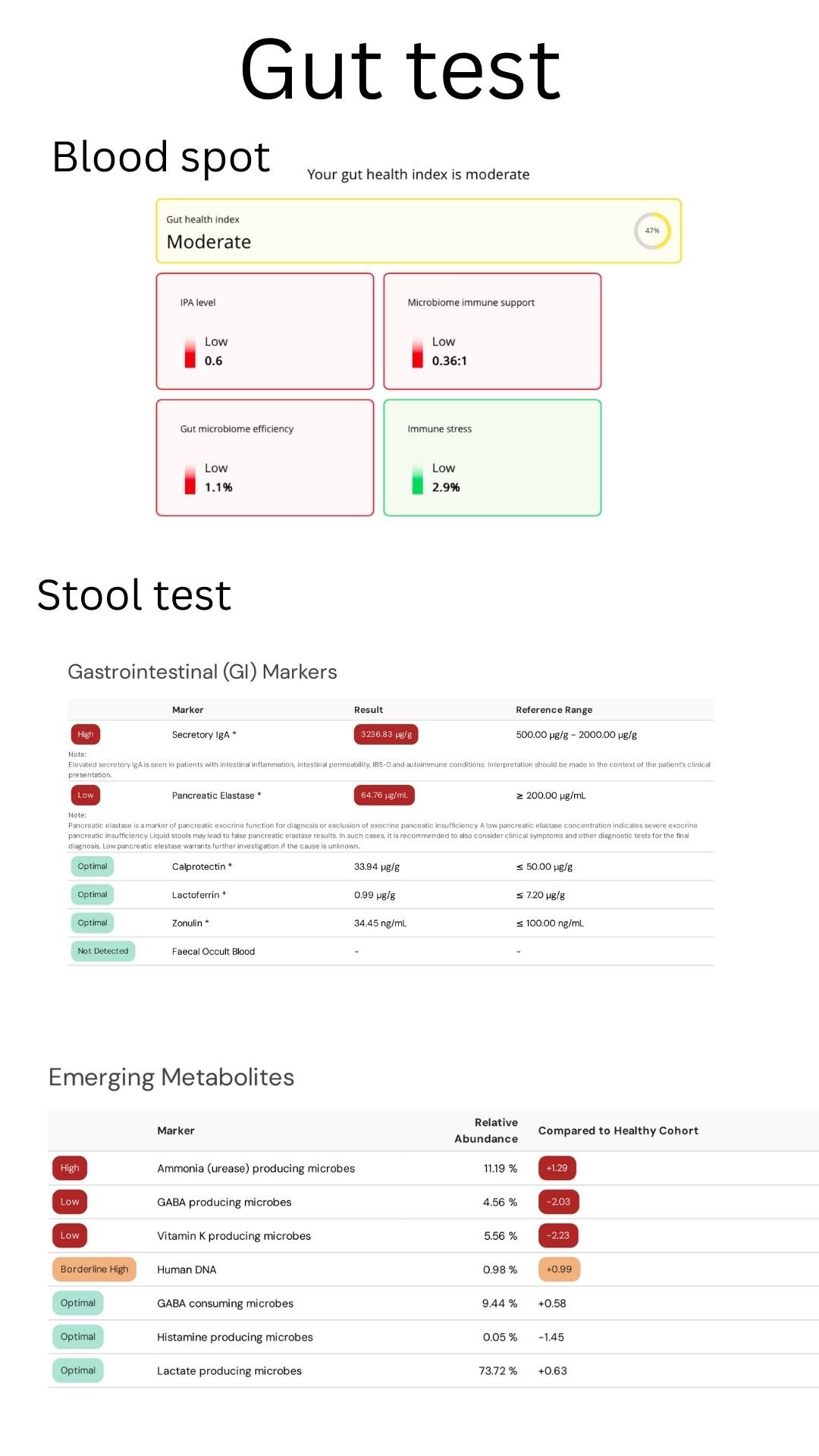
In my case the stool test showed reassuring findings such as good microbial diversity and no significant pathogens. However it also revealed important functional issues. There was clear evidence of immune activation at the gut lining and very low pancreatic elastase which is a marker of pancreatic exocrine function. This suggested that digestion was impaired particularly the ability to break down fats and proteins efficiently.
The stool test also showed increased fermentation byproducts which can contribute to bloating discomfort and systemic inflammation when digestion upstream is poor.
What this test does very well is show what the gut environment looks like on the inside. It tells us how well food is being digested how the immune system in the gut is responding and how microbes are behaving as a result.
The Blood Gut Health Test
What It Measures
The blood based gut health test takes a very different approach. Rather than looking directly at bacteria it measures microbial metabolites in the blood. These are compounds produced by gut bacteria that circulate systemically and influence immune function brain health metabolism and inflammation.
Key markers such as indole related metabolites reflect how effectively gut bacteria are converting nutrients like tryptophan into protective compounds that support the gut barrier and immune balance.
In my results these protective metabolites were low. Importantly immune stress markers were not elevated which suggested that my body was not in an inflammatory crisis but rather lacked sufficient protective microbial output.
This test reflects function rather than composition. It shows how well the gut microbiome is working rather than what microbes are present.
Why These Tests Are Better Together
Individually each test tells part of the story. Together they tell the full story.
The stool test showed that I had a reasonable microbiome but impaired digestion and immune activation in the gut. The blood test showed that despite microbial presence the beneficial outputs were low. When combined these findings pointed away from infection or classic dysbiosis and toward a digestion driven problem.
The key insight came from the pancreatic elastase result. Poor pancreatic enzyme output means food is not fully broken down. This leads to increased fermentation downstream immune activation at the gut lining and reduced availability of substrates for beneficial microbial metabolites. In other words the microbes were present but underperforming because digestion upstream was compromised.
The Root Cause
Pancreatic Insufficiency and Type One Diabetes
The most important conclusion from combining these tests was that the likely root cause of my gut issues is pancreatic exocrine insufficiency. This is a condition where the pancreas does not produce enough digestive enzymes and it can occur independently of blood sugar control.
In people with long standing type one diabetes this is not uncommon. Chronic autoimmune damage altered pancreatic signalling and reduced enzyme secretion can develop quietly over time. It often goes undiagnosed because standard investigations do not look for it unless symptoms are severe.
This finding reframed everything. The issue was not that my gut microbiome was broken. The issue was that digestion was insufficient which then affected microbial behaviour immune activation and systemic resilience.
Why This Matters Clinically
This experience reinforced an important principle in functional medicine. Do not treat what you assume. Test function not just structure and use multiple tools to understand the full picture.
If I had relied only on the stool test I might have focused too much on microbes. If I had relied only on the blood test I might have assumed stress or lifestyle was the main driver. Together they revealed a clear physiological explanation that is both actionable and reversible.
Final Thoughts
Gut health is not one test and not one pathway. It is a dynamic interaction between digestion microbes immunity and systemic metabolism. For people with autoimmune conditions like type one diabetes looking deeper can uncover contributors that have been quietly affecting health for years.
For me the takeaway was simple but powerful. Support digestion first and everything downstream has the opportunity to improve.
This is exactly why I now use layered testing approaches in clinical practice and why personalised interpretation matters far more than chasing diagnoses in isolation.