Omega-3 supplements are everywhere.
From beauty shelves to gym bags, almost everyone seems to be taking them.
But here is the uncomfortable truth I see repeatedly in clinic:
many people are taking omega-3… yet their bodies are not actually using it.
So how do you know if your omega-3 supplement is truly working, or if it is just another capsule on your supplement list?
Let’s break it down.
Why Omega-3 Matters More Than You Think
Omega-3 fatty acids, particularly EPA and DHA, are not just “nice to have” nutrients. They are structural components of your cells.
They influence:
• Skin barrier integrity and hydration
• Inflammation and acne pathways
• Hormone signalling and prostaglandins
• Brain function and mood stability
• Cardiovascular and metabolic health
• Immune regulation and wound healing
From a functional dermatology perspective, omega-3 is one of the most powerful inside-out skin nutrients we have.
Yet…
Taking omega-3 does not automatically mean you are benefiting from it.
The Biggest Myth: “If I Take Omega-3, I’m Covered”
In clinic I often see patients who:
• Take omega-3 daily
• Eat fairly well
• Avoid obvious junk
Yet when we test their fatty acid profile, their omega-3 levels are still low or suboptimal.
Why?
Because dose, absorption, quality, oxidation, gut health and metabolic demand all determine whether omega-3 is actually working for you.
How Do We Know If Omega-3 Is Working?
Rather than guessing, functional medicine looks at objective markers.
A fatty acid profile blood test allows us to measure:
• Omega-3 Index (your EPA + DHA levels in cell membranes)
• Omega-6 to Omega-3 ratio
• Inflammatory balance
• Cell membrane fluidity
• Arachidonic acid and inflammatory potential
This moves omega-3 from “supplement guessing” into precision nutrition.
Signs Your Omega-3 Might NOT Be Working
Even if you take it daily, omega-3 may not be working if:
• Your skin remains inflamed, reactive or slow to heal
• Acne or rosacea does not improve despite dietary changes
• You still experience dry skin or impaired barrier function
• PMS, brain fog or mood instability persist
• Inflammatory blood markers remain high
• Your Omega-3 Index stays below optimal on testing
In these cases, the issue is rarely “you need more capsules” — it is usually how your body is handling it.
The 6 Most Common Reasons Omega-3 Fails to Work
1. Wrong Dose for Your Body
Most over-the-counter supplements provide far less EPA and DHA than is needed to shift your cellular levels.
Many people require 2–4 grams of combined EPA+DHA daily, especially if:
• They are active
• Have inflammation
• Have metabolic or autoimmune conditions
• Have hormonal imbalance
• Are managing skin disease
2. Poor Absorption
If your gut is inflamed, your bile flow is impaired, or you have low digestive enzymes, you may not be absorbing fats properly.
This is very common in:
• IBS
• Leaky gut
• SIBO
• Gallbladder issues
• Chronic bloating
In these cases, omega-3 can be taken religiously but barely enters your cells.
3. Oxidised or Low-Quality Oils
Omega-3 is highly fragile.
Poor quality oils:
• oxidise easily
• become pro-inflammatory
• and may worsen rather than reduce inflammation
This is why supplement quality, storage, packaging and antioxidant protection matter enormously.
4. Too Much Omega-6 in the Diet
Even with good omega-3 intake, a high omega-6 intake from:
• sunflower oil
• corn oil
• soybean oil
• processed foods
can overwhelm the balance and maintain inflammation.
Functional nutrition is about ratio, not just absolute intake.
5. Increased Demand from Stress, Training or Illness
If you train intensely, are chronically stressed, inflamed, or insulin resistant, your body uses omega-3 faster.
In these cases:
Your intake needs to match your metabolic demand.
6. Not Enough Antioxidant Support
Omega-3 requires protection from oxidative damage.
Without sufficient:
• polyphenols
• vitamin E
• vitamin C
• selenium
omega-3 becomes unstable and far less effective inside the body.
Why This Matters for Skin Health
From a functional dermatology perspective, omega-3 directly influences:
• Sebum quality
• Inflammatory acne pathways
• Rosacea and eczema flare thresholds
• Barrier repair
• Post-procedure healing
• Pigmentation regulation
• Collagen integrity
I often say:
You cannot out-treat inflamed skin from the outside if your fatty acid balance is wrong on the inside.
This is why omega-3 is not a “general wellness supplement” in my clinic — it is a foundational skin and hormone therapy tool.
What Optimal Omega-3 Actually Looks Like
In functional testing, we aim for:
• Omega-3 Index: ideally 8–10%
• Omega-6:3 ratio: ideally ≤3:1
• Balanced inflammatory markers
• Good membrane fluidity
These correlate strongly with:
• reduced systemic inflammation
• improved skin resilience
• better metabolic and hormonal regulation
• improved cardiovascular protection
How to Make Your Omega-3 Actually Work
Here is how I approach omega-3 optimisation clinically:
1. Test, Don’t Guess
Measure your fatty acid profile rather than assuming.
2. Choose the Right Form
Look for:
• high EPA+DHA per dose
• triglyceride or phospholipid form
• oxidation-protected formulations
• third-party testing
3. Support Digestion
Ensure:
• adequate bile flow
• digestive enzyme support
• fat absorption is optimised
4. Reduce Omega-6 Load
Avoid industrial seed oils and processed foods.
5. Pair With Antioxidants
Omega-3 works best when supported by:
• olive polyphenols
• vitamin E
• vitamin C
• selenium
6. Re-test and Adjust
Omega-3 is not static.
What works at one stage of life may not be enough at another.
A Personal Reflection From My Own Testing
This is not just something I see in clinic, it is something I have experienced myself.
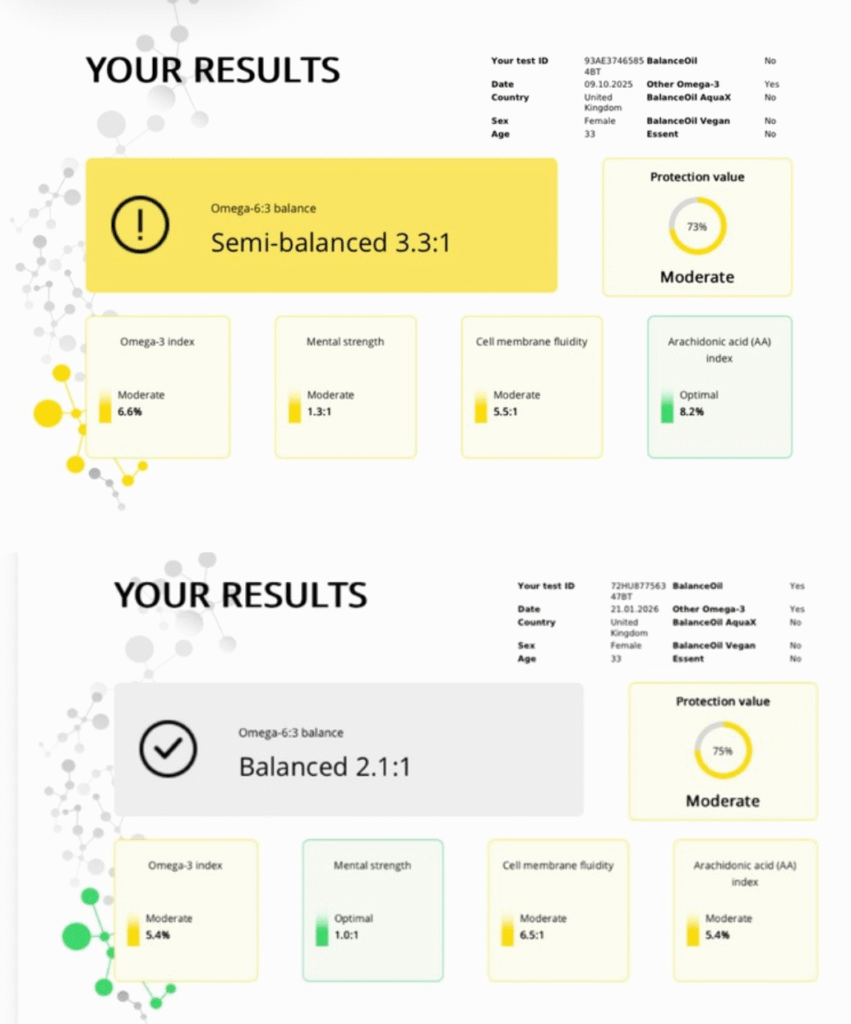
Despite taking omega-3 consistently and being very conscious about my nutrition, my own fatty acid testing showed that while my Omega-6 to Omega-3 ratio improved significantly over time, my Omega-3 index remained only moderate and even dropped slightly on my most recent test. What this highlighted to me is that taking omega-3 is not the same as optimising omega-3. Absorption, dose, metabolic demand and overall inflammatory load all matter far more than simply ticking a supplement box. It reinforced exactly why I believe in testing, not guessing, and in personalising supplementation rather than assuming that what works for one person will automatically work for another.